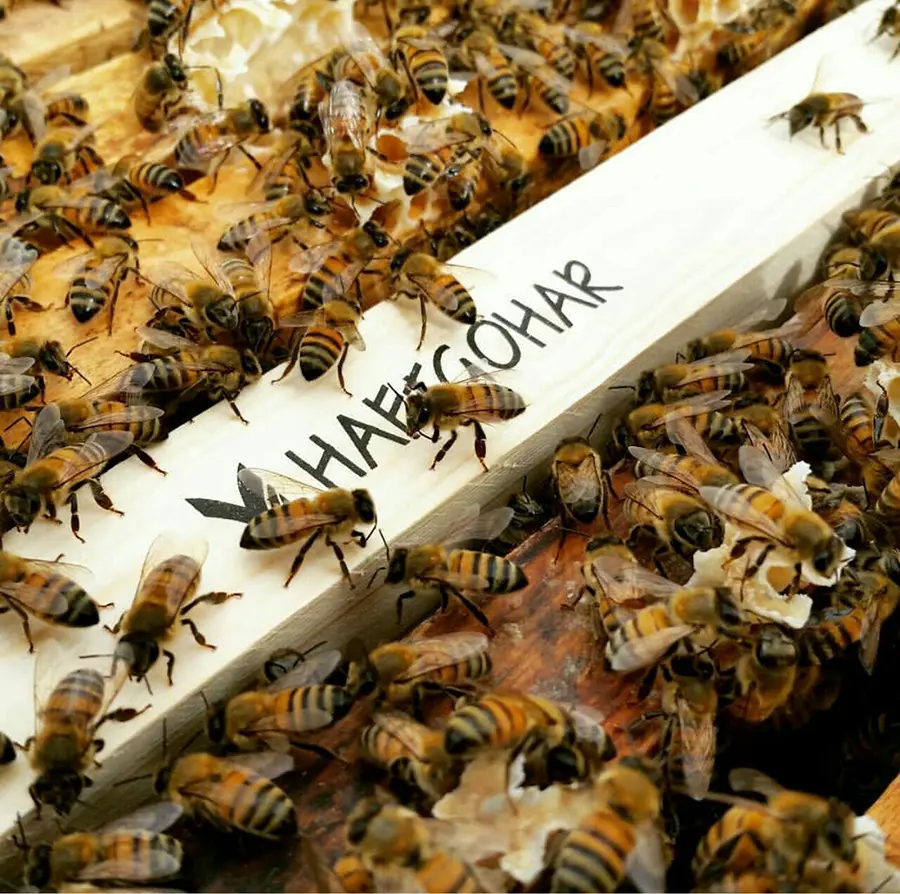
An Investigation into Modern Beehive Types in Iran
Honeybees are nest-building insects that follow specific, uniform principles in constructing their nests. They build nests in mountain crevices or tree trunks, storing honey for their food supply, reproduction, and overwintering, often producing a surplus beyond their needs. By discovering and managing the natural behaviors of honeybees, humans were able to obtain more honey. Over time, as populations grew, demand increased; this gradually led to advancements in the science of beekeeping and its tools, and ultimately the progress of the beekeeping industry, resulting in higher honey production. Industrial production transformed honey into a commercial commodity. Commercial goods have their own specific rules and regulations and are closely tied to competition.
The global communication network and the ease of transporting goods have diminished the prosperity of local and traditional markets; these markets are no longer a safe haven for producers offering any price or quality. In the Iranian market as well, various sectors of industry have recently experienced stagnation or closure due to an inability to compete with imported goods, and clear signs of this threat are also visible in the beekeeping industry. Although this threat is serious and destructive, if managed, it can be an opportunity for growth and change in the processes of previously inefficient mechanisms.
The market requires honey in large quantities, with appropriate quality, and at a competitive price. Increasing the number of hives is an ultimate, costly, and ineffective solution. Before resorting to this, one must turn to methods of increasing productivity—both in terms of reducing production costs and in raising the amount of honey produced per hive. To increase productivity, all factors influencing this industry must be reviewed in detail.